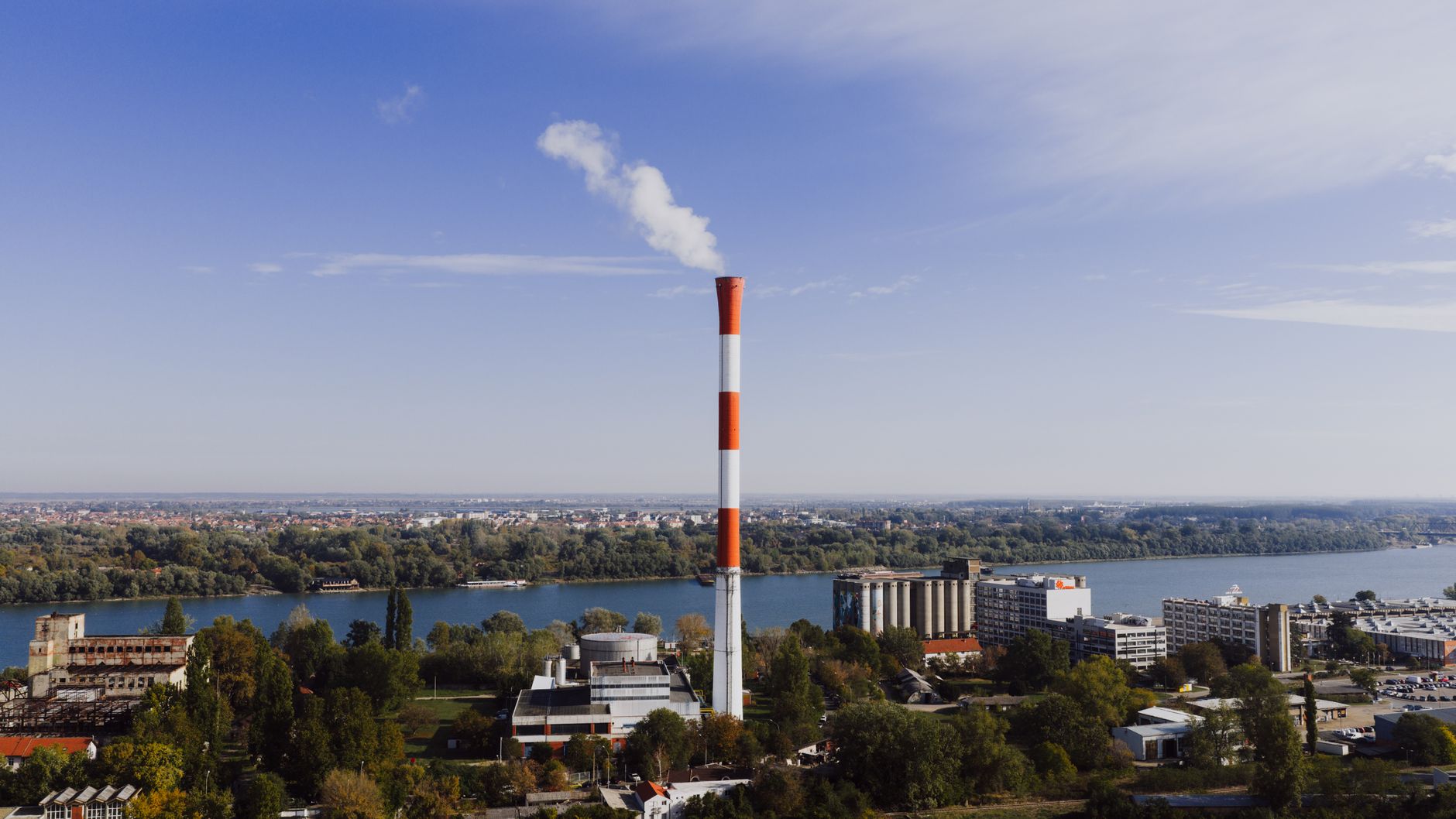
DICDL is Dholera Industrial City Development Ltd, the special purpose vehicle that builds and operates Dholera SIR. Incorporated on 28 January 2016 with its registered office in Gandhinagar, it is owned 51% by the Gujarat government through DSIRDA and 49% by the central government through the NICDC Trust. DICDL develops the trunk infrastructure, roads, water systems and utilities, and operates the ICCC command centre. It differs from DSIRDA, the statutory planner, and NICDC, the national corridor coordinator. DICDL builds, DSIRDA plans, NICDC coordinates.
DICDL is Dholera Industrial City Development Ltd, the special purpose vehicle (SPV) that actually builds and operates Dholera SIR. In plain terms, DICDL is the government-owned company that turns the master plan into physical infrastructure: roads, water systems, utilities and the smart-city command centre. It was incorporated on 28 January 2016, with its registered office in Gandhinagar, and it is owned 51% by the Gujarat government through DSIRDA and 49% by the central government through the NICDC Trust. If DSIRDA is the planner and NICDC the corridor coordinator, DICDL is the builder.
This page explains what DICDL is, what it does, its ownership and formation, and how it differs from DSIRDA and NICDC. Every figure is labelled durable or reported, and we stay neutral on developers.
DICDL is Dholera Industrial City Development Ltd, the SPV that builds and operates Dholera SIR, incorporated 28 January 2016, owned 51% by Gujarat (via DSIRDA) and 49% by the Centre (via the NICDC Trust).
What is DICDL?
DICDL stands for Dholera Industrial City Development Ltd. It is a special purpose vehicle, a company created for the specific purpose of developing Dholera as an industrial city, and it functions as the execution arm of the project. Where DSIRDA holds statutory planning and land authority, DICDL is the entity that raises finance, awards contracts, and builds and operates the trunk infrastructure. It is the corporate body whose name sits behind the construction of the Activation Area's roads, water plant and utilities, and behind the operation of the Integrated Command and Control Centre. For the region it serves, see our what is Dholera SIR guide.
What does DICDL do?
DICDL builds and operates the city. In practice that means developing the trunk infrastructure that makes land usable: the internal road network, the water treatment plant and reservoirs, underground power, ICT and fibre ducts, piped gas, recycled-water and drainage systems, and the stormwater canal, all concentrated so far in the Activation Area. It also operates the ICCC, the smart-city control layer in the ABCD building, and provides single-window clearance functions. According to DICDL documentation from 2024, the Activation Area's infrastructure, about 72 km of roads and a roughly 50 MLD water plant among it, is reported built. For that zone, see our Dholera Activation Area page.
When was DICDL formed and where is it based?
DICDL was incorporated on 28 January 2016. Its registered office is in Gandhinagar, at the 6th Floor, Block 1, Bhavan, Sector 11, Gandhinagar 382017. The incorporation date matters because it marks the point at which a dedicated corporate vehicle was formally established to execute the project, distinct from the planning authority. Being based in Gandhinagar, the state capital, reflects its nature as a government-owned SPV rather than a private developer. These are durable facts, useful for verifying the entity's identity against official records.
Who owns DICDL?
DICDL is owned 51% by the Gujarat government, through DSIRDA, and 49% by the central government, through the NICDC Trust. This 51/49 split is a durable and frequently cited fact, and it is the structural reason Dholera is described as a state-led project with central backing. The majority state stake means Gujarat has the controlling hand in the builder, while the substantial central stake ties DICDL into the national corridor programme. This ownership structure is also why the three bodies are interconnected rather than independent: DSIRDA holds the state stake, and NICDC holds the central stake, in the same building company.
How is DICDL different from DSIRDA?
DSIRDA plans and regulates; DICDL builds and operates. DSIRDA is the statutory planning and land authority created under the Gujarat SIR Act, 2009, with power to prepare the development plan and sanction town-planning schemes. DICDL is the SPV that executes construction within that plan and runs the resulting infrastructure. A useful analogy: DSIRDA is the town-planning rulebook and landlord, DICDL is the general contractor and operator. The two are linked because DSIRDA holds the state's 51% in DICDL, so the planner is also the majority shareholder in the builder. For the authority in detail, see our DSIRDA guide.
How is DICDL different from NICDC?
DICDL operates at the project level, building one city; NICDC operates at the national level, coordinating the whole corridor. NICDC, the National Industrial Corridor Development Corporation (formerly DMICDC), is the central nodal agency for the Delhi-Mumbai Industrial Corridor and other corridors, and it holds the central 49% in DICDL through the NICDC Trust. So NICDC is both a coordinator above the project and a shareholder within its SPV. DICDL, by contrast, is focused entirely on developing Dholera. For the corridor picture, see our DMIC explained guide.
Who does what in Dholera? DICDL in the trio
| Body | Role | Ownership / basis |
|---|---|---|
| DSIRDA | Plans and regulates; sanctions TP schemes | Statutory authority under SIR Act, 2009 |
| DICDL | Builds and operates the city (SPV) | Gujarat 51% (via DSIRDA), Centre 49% (via NICDC Trust) |
| NICDC | Coordinates the national corridor | Central nodal agency; holds 49% in DICDL |
Is DICDL a private developer or a government body?
DICDL is a government-owned company, not a private developer, since it is wholly owned by the Gujarat and central governments in a 51/49 split. This matters when reading Dholera content: DICDL builds public trunk infrastructure and operates city systems, but it is not a broker selling individual plots to retail buyers. Individual plotted projects in the region are typically private developments that must be registered on the GUJRERA portal before marketing, and deeds register at the Dhandhuka Sub-Registrar. Do not confuse DICDL's role as the public builder with the private projects that market plots within or near the region.
Why does understanding DICDL matter?
Because DICDL is the entity whose delivery determines whether the master plan becomes a city. Planning power sits with DSIRDA, but execution, finance, contracts, construction and operation, sits with DICDL, so the pace and quality of the build depend heavily on it. When you read that Dholera's Activation Area infrastructure is 'reported built', that report comes largely from DICDL, which is why cross-checking against the official portal matters. Understanding DICDL also clarifies the ownership logic: the same 51/49 structure recurs because it is the constitutional shape of the builder. For the current build state, see our Dholera current status 2026 page.
Why is DICDL structured as a special purpose vehicle?
The SPV structure is deliberate and common for large infrastructure projects. A special purpose vehicle is a company created to do one defined job, here, developing Dholera as an industrial city, which lets the project ring-fence its finances, contracts and liabilities separately from the general government budget. This separation makes it easier to raise project finance, enter into construction and operation contracts, and hold clear accountability for delivery. It also allows the two levels of government to share ownership cleanly in the 51/49 split, with Gujarat contributing through DSIRDA and the Centre through the NICDC Trust. In short, the SPV is the corporate wrapper that turns a policy ambition into an executable, financeable project with a single responsible entity.
How does DICDL fund the development?
As the execution SPV, DICDL is the vehicle through which project finance and government funding flow into building the city. The Delhi-Mumbai Industrial Corridor programme, coordinated nationally by NICDC, is the broader framework that channels central support into nodes like Dholera, and the 49% central stake in DICDL reflects that involvement. The specific financing arrangements evolve over time and are not fully detailed in a single durable public figure we can cite, so we avoid inventing numbers. What is durable is the ownership structure and DICDL's role as the entity that commissions and pays for the trunk infrastructure. Anyone seeking exact funding figures should consult DICDL's official disclosures rather than promotional summaries.
What has DICDL actually delivered so far?
DICDL's most tangible delivery is the Activation Area's trunk infrastructure. Per its 2024 documentation, this includes about 72 km of internal roads (18 to 70 m wide) with pedestrian and cycle lanes, a roughly 50 MLD water treatment plant plus reservoirs, underground power, ICT and fibre ducts, piped natural gas, a recycled-water network, separated wastewater lines, a 6.5 km stormwater canal, and the operational ICCC in the ABCD building. These are reported-built assets concentrated in the roughly 22.5 sq km Activation Area, which is about 4.25% of the region's developable land. So DICDL has delivered a compact, serviced core, while the wider region remains largely to be built, an honest split between real delivery and long-range plan.
Does DICDL operate the city's systems too?
Yes, building is only half of DICDL's remit; it also operates city systems. The clearest example is the ICCC, the Integrated Command and Control Centre in the ABCD building, which monitors water, power, lighting, surveillance, traffic and environment from one control room and is reported operational. This operating role matters because a smart city is not just built infrastructure but managed infrastructure, and DICDL is the entity behind that management layer. As the region grows, DICDL's operational responsibilities are designed to scale with it, extending from the Activation Area into the wider town-planning schemes as they are serviced.
How does DICDL differ from the private developers you see advertised?
This distinction protects buyers from a common confusion. DICDL is the government-owned builder of public trunk infrastructure; the developers advertising plots and projects in and around Dholera are private companies selling real-estate products. A private plotted development must register on the GUJRERA portal before marketing, and its promises are its own, not DICDL's. Real GUJRERA registration numbers in this area follow patterns like PR/GJ/AHMEDABAD/DHOLERA/DSIRDA/[code], and deeds register at the Dhandhuka Sub-Registrar. When a brochure invokes DICDL or 'government development' to lend credibility, remember that the public infrastructure and the private project are legally separate, and each private project must be verified on its own.
What is DICDL's track record on timelines?
Honestly, mixed, in line with the project as a whole. DICDL has delivered real infrastructure in the Activation Area, but the broader project has a documented history of delay: land acquisition was litigated, with the Gujarat High Court staying SIR acquisition in 2015 after farmer petitions, and a 2017 Business Standard review found only about 290 of the then 900-plus sq km secured, describing the DMIC broadly as a tale of abandonments and delays. Several anchor timelines, notably the airport, have slipped repeatedly. None of this is a verdict on DICDL alone, since delivery depends on many actors, but it means DICDL's future milestones should be read as targets to be verified, not as certainties.
How can you verify DICDL and its claims?
Use official sources. The DSIRDA and DICDL portal at dholera.gujarat.gov.in is the primary source for the entity, its projects and its reported infrastructure. Corporate details such as incorporation can be checked against Ministry of Corporate Affairs records, and corridor-level information sits with NICDC at nicdc.in. For any private project that invokes DICDL or the region, verify registration independently on the GUJRERA portal before trusting it. If a claim attributed to DICDL cannot be traced to its official disclosures, treat it as unverified. This source discipline is the reliable way to separate DICDL's real delivery from marketing that borrows its name.
How does DICDL fit the wider corridor picture?
DICDL is one node's building company within a national programme. The Delhi-Mumbai Industrial Corridor is designed to string together several new industrial cities along a backbone between the two metros, and each node has its own development apparatus. Dholera, often described as the corridor's largest node (a reported superlative), has DICDL as its dedicated SPV, sitting beneath NICDC's national coordination and DSIRDA's regional planning. Seeing DICDL this way, as the local execution engine of a much larger corridor vision, explains both its ambition and its constraints: it is building one flagship node whose success is meant to demonstrate the corridor model, but its fortunes are tied to the same national programme that has itself moved slowly.
DICDL is the builder and operator at the centre of Dholera SIR: a government-owned SPV, incorporated in 2016, that translates the master plan into infrastructure and runs the city's systems. Knowing that DICDL builds and operates, that DSIRDA plans and regulates, and that NICDC coordinates the corridor is the single clearest way to read the entire project accurately. When you evaluate any Dholera milestone, identify whether it is a planning act, a construction act or a corridor decision, and verify project-specific claims independently, because DICDL delivers the public infrastructure, not guarantees on any private plot or any promise of appreciation.
Frequently asked questions
What is DICDL?
DICDL is Dholera Industrial City Development Ltd, the special purpose vehicle that builds and operates Dholera SIR. It develops the trunk infrastructure, roads, water systems, utilities and the ICCC command centre, turning the master plan into physical reality. It was incorporated on 28 January 2016 and is based in Gandhinagar.
Who owns DICDL?
DICDL is owned 51% by the Gujarat government, through DSIRDA, and 49% by the central government, through the NICDC Trust. This 51/49 split is the structural reason Dholera is described as a state-led project with central backing, and it links the three governing bodies through shared ownership of the builder.
When was DICDL formed?
DICDL was incorporated on 28 January 2016. Its registered office is at the 6th Floor, Block 1, Bhavan, Sector 11, Gandhinagar 382017. The incorporation date marks when a dedicated corporate vehicle was formally established to execute the Dholera project, distinct from the planning authority DSIRDA.
What is the difference between DICDL and DSIRDA?
DSIRDA plans and regulates as the statutory planning and land authority, while DICDL is the SPV that builds and operates the city. They are linked because DSIRDA holds the state's 51% stake in DICDL, so the planner is also the majority shareholder in the builder.
Is DICDL a private company selling plots?
No. DICDL is a government-owned SPV, owned entirely by the Gujarat and central governments, that builds public trunk infrastructure and operates city systems. It is not a broker selling individual plots. Private plotted projects in the region must be registered on the GUJRERA portal before marketing and are separate from DICDL.
- DICDL (dholera.gujarat.gov.in)
- DSIRDA (dholera.gujarat.gov.in)
- NICDC (nicdc.in)
- Gujarat SIR Act, 2009
- Ministry of Corporate Affairs (incorporation record)
- Wikipedia: Dholera SIR (cross-check)
The free Dholera First-Timer’s Checklist
Fifteen things to verify before you pay a rupee, in one printable PDF. Written for buyers, not brokers.